Q&R : De la boutique de pneus au producteur : une production réussie de poudre de caoutchouc au Mexique
Découvrez comment M. Carlos de Jalisco a transformé des pneus usagés en une entreprise rentable de production de poudre de caoutchouc au Mexique en utilisant une ligne de recyclage de pneus semi-automatique à petit budget. Son installation modulaire produit de la poudre de caoutchouc propre de 20 à 40 mesh pour les sols de gym et les surfaces de terrain de jeu, prouvant que le recyclage de pneus à petite échelle peut être pratique, abordable et réussi.
Le problème des pneus usagés au Mexique est bien connu, mais comment un entrepreneur disposant d’un budget limité peut-il transformer ce problème en une entreprise rentable ? Nous avons discuté avec notre client, M. Carlos de Jalisco, qui a récemment créé une installation prospère de production de poudre de caoutchouc au Mexique. Il a partagé son parcours, ses défis et la stratégie précise qui a mené à son succès.
Q&A de Shuliy Client du Mexique
Q1 : M. Carlos, merci pour votre temps. Qu’est-ce qui vous a d’abord amené à envisager le recyclage des pneus ?
M. Carlos : « Merci de m’avoir invité. Cela a commencé ici même dans l’atelier de pneus de ma famille (llantera). Pendant des années, nous avons vu une montagne de pneus usagés s’accumuler derrière l’atelier. Nous savions que c’était un problème environnemental, mais je voyais aussi cela comme une matière première gaspillée. J’ai commencé à rechercher le secteur du recyclage des pneus au Mexique et j’ai réalisé que si je pouvais transformer ces pneus en quelque chose de précieux, cela pourrait être une nouvelle aventure formidable. Je ne voulais pas simplement les vendre pour les brûler; j’ai vu un réel marché pour une poudre de caoutchouc de haute qualité.”
Q2 : Lancer une nouvelle activité peut être intimidant. Quels ont été les plus grands obstacles initiaux que vous avez rencontrés ?
M. Carlos : « Le plus grand obstacle était le coût. Lorsqu’on regarde les machines de recyclage de pneus au Mexique, la plupart de ce que l’on voit sont des lignes de déchiquetage entièrement automatiques qui coûtent une fortune. Pour une petite entreprise de recyclage de pneus comme la mienne, ce genre d’investissement n’était tout simplement pas possible. J’ai failli abandonner, pensant que cette industrie n’était que pour les grandes entreprises. Mon défi était de trouver une solution fiable et efficace qui corresponde à mon budget.”
Q3 : C’est un problème courant. Vous avez finalement choisi une autre voie. Pourriez-vous expliquer la solution que vous avez trouvée ?
Mr. Carlos: “Exactly. I found that a semi-automatic tire recycling line was the perfect answer. Instead of one massive, expensive machine, it uses a series of smaller, more affordable machines that ‘decompose’ the tire step-by-step. It’s a brilliant strategy.
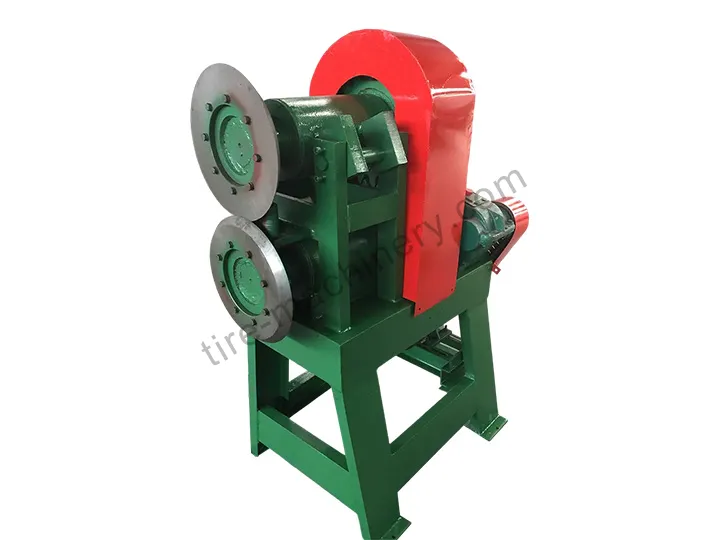
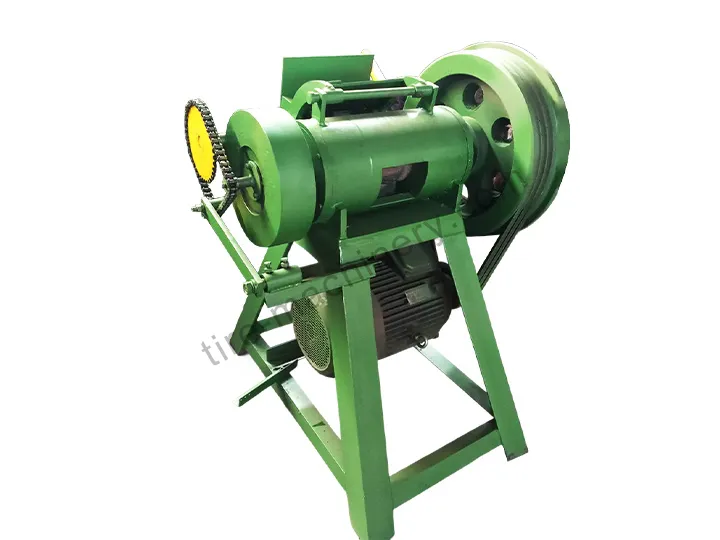
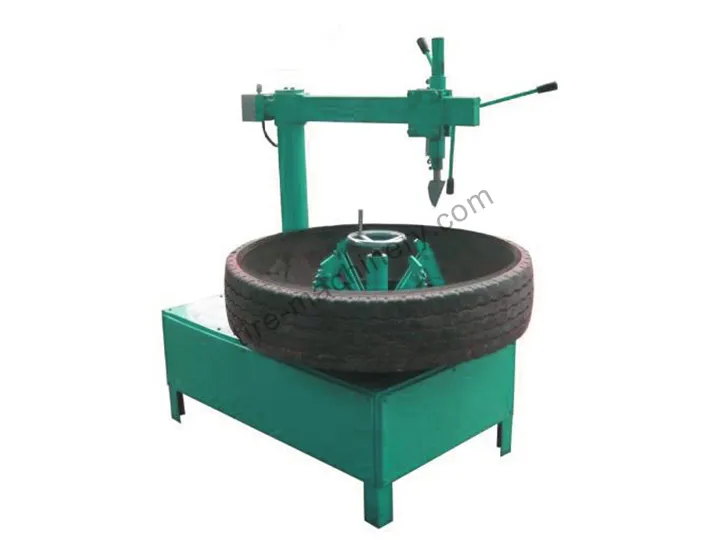
Nous commençons par une Découpeur d’anneau de pneu pour enlever la tôle d’acier robuste. Puis, un Coupeur de bande de pneu et une Coupeur de blocs de pneus process the rest of the tire into small, uniform chunks. This modular approach not only lowered the initial cost but also made the entire operation feel more manageable and less intimidating for my team.”
Q4 : La dernière étape consiste à créer le produit de grande valeur. Comment votre ligne gère-t-elle la production réelle de poudre de caoutchouc ?
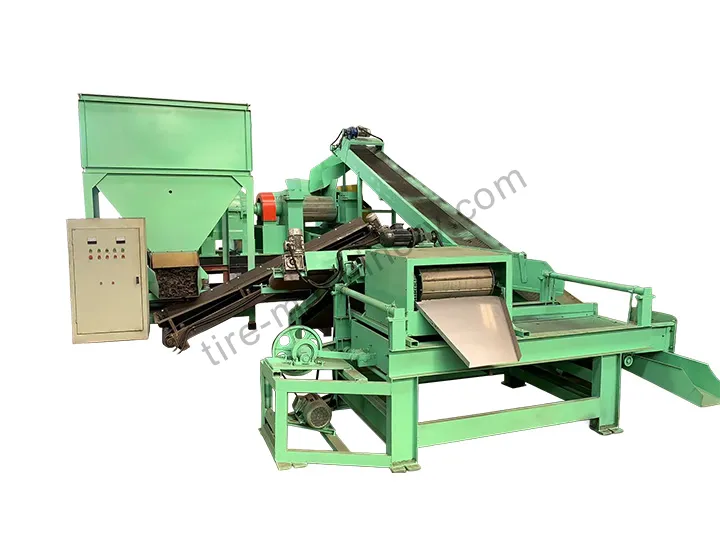
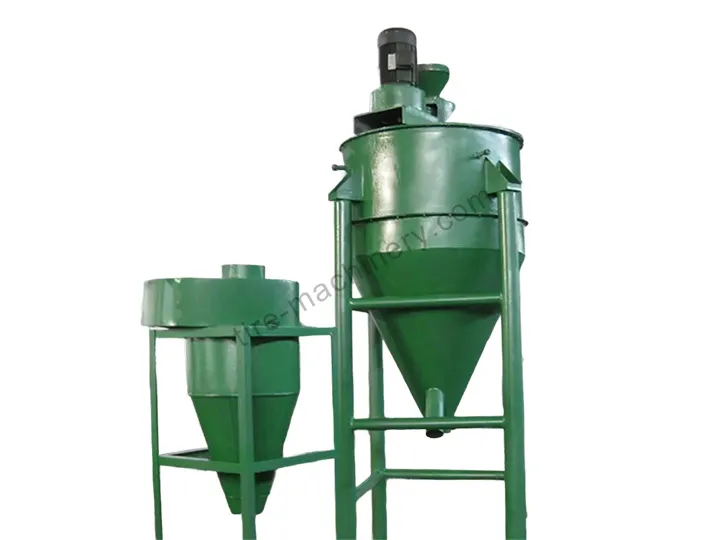
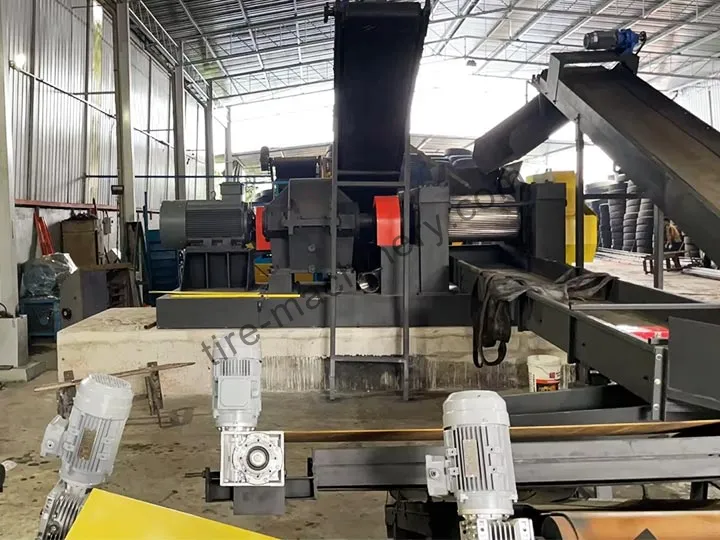
Mr. Carlos: “This is where the real value is created. The rubber chunks are fed into our Rubber Grinder. We looked for a specific Broyeur de caoutchouc en vente au Mexique, qui était à la fois durable et efficace, et celui-ci a été fantastique. Il broie les morceaux en une poudre fine, de 20 à 40 mailles. Critiquement, le système inclut un Séparateur de fibres that removes all the textile fluff, so the final rubber powder is very clean. This purity is why our customers choose us.”
Q5 : Et quels ont été les résultats ? Cette entreprise a-t-elle été réussie ?
Mr. Carlos: “It has been a great success. We are now a known local supplier for high-quality rubber powder. Manufacturers in the Guadalajara area buy from us to make gym revt et sols de jeu. The business became profitable much faster than I expected because the initial investment was reasonable and the product value is high. We proved that rubber powder production in Mexico is a viable and profitable business, even for smaller entrepreneurs.”
Un plan directeur pour votre réussite
L’histoire de M. Carlos fournit un plan puissant. En choisissant un système flexible et modulaire, il a construit une entreprise prospère adaptée à son budget et aux besoins du marché local. Son parcours démontre qu’avec la bonne stratégie, chacun peut entrer dans cette industrie en pleine croissance.
If you are inspired by this successful case and want to start your own success journey, explore our tire recycling line solutions or contact us today for a personalized quote.
Machines associées à la production de poudre de caoutchouc au Mexique
Machine de broyage de pneus en caoutchouc
Machine de broyage de pneus | Applications principales du granulateur de caoutchouc La machine de broyage de pneus est la machine principale d'une ligne de production de poudre de caoutchouc. Elle est conçue pour moudre le caoutchouc en poudre ou…