Why Does a Tire Grinder Have a Fire Risk and How is it Prevented?
The fire risk in a tire grinder originates from a simple but dangerous combination known as the “fire triangle”: heat, fuel, and oxygen. The intense friction of the steel rollers grinding rubber generates extreme heat. The “fuel” is the highly combustible fine rubber powder created during the process. Oxygen is, of course, present in the…
The fire risk in a tire grinder originates from a simple but dangerous combination known as the “fire triangle”: heat, fuel, and oxygen.
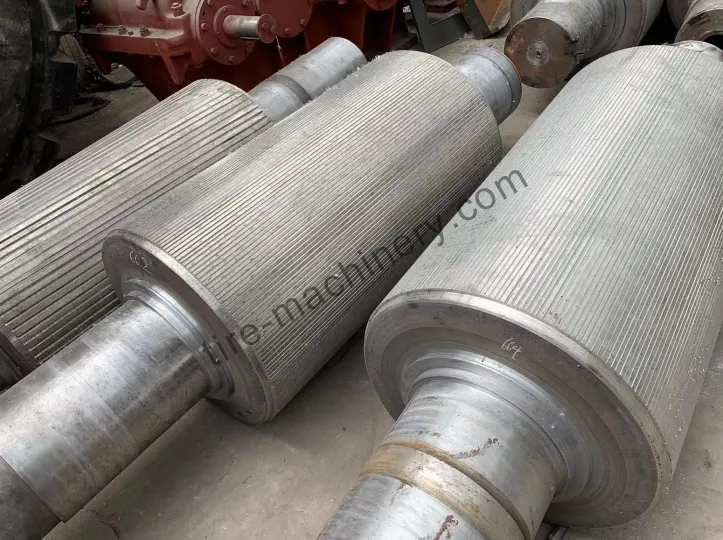
The intense friction of the steel rollers grinding rubber generates extreme heat. The “fuel” is the highly combustible fine rubber powder created during the process. Oxygen is, of course, present in the air. When these three elements combine under the right conditions, a fire can ignite.
The most common scenario is not a sudden flame during operation, but a smoldering fire that starts hours after the machine has been shut down. This happens when the fine rubber dust is left to accumulate on the hot internal components of the machine. The residual heat is often enough to cause the dust to begin to smolder slowly, eventually erupting into a full fire long after the last employee has gone home.
Prevention, therefore, focuses on breaking the fire triangle. Since you cannot eliminate the heat of friction or the oxygen in the air, the only element you can control is the fuel. This is why the single most important fire prevention step is a thorough cleaning of the tire grinding machine immediately after every shift. By removing the residual rubber dust, you remove the fuel source, effectively eliminating the risk of a post-operation fire.