
Wie hoch ist die Standarddichte von hochwertigem Export-Qualitäts-Shisha-Kohle?
Dichte ist der entscheidende Qualitätsstandard für Export-Qualität Wasserpfeifen-Kohle, der Brenndauer, Härte und Versandhaltbarkeit bestimmt. Erfahren Sie, warum hochwertige Shisha-Kohle 1,2 bis 1,3 t/m³ erreichen sollte, wie der Druck der Pressmaschine die Verdichtung beeinflusst und wie die richtige Pulvergröße, Feuchtigkeit und Bindemittelverhältnisse helfen, starke, lang brennende Kohlenwürfel herzustellen.
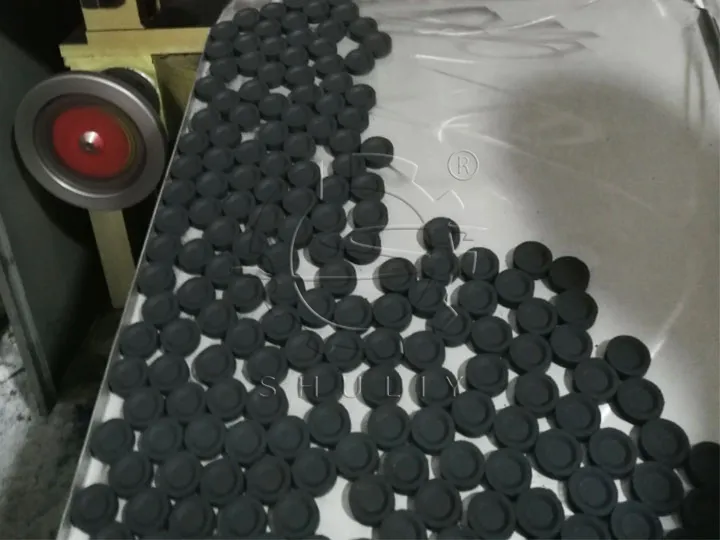
Beim Verhandeln mit internationalen Großhändlern fragen diese selten nach der Farbe Ihres Kohlenstoffs. Stattdessen testen sie sein Gewicht, seine Härte und sein Brennverhalten. Das physikalische Merkmal, das all diese Faktoren kontrolliert, ist die Dichte.
If your charcoal is too light and airy, it will burn out quickly and crumble during ocean shipping. If you want to manufacture premium, export-grade products, your hookah charcoal must achieve a strict standard density of 1.2 to 1.3 tons per cubic meter (t/m³).
Hier ist genau erklärt, warum diese Dichte-Messung der ultimative Qualitätsnachweis ist und wie Ihre Fabrikausrüstung bestimmt, ob Sie bestehen oder durchfallen.
1. Dichte bestimmt die 60-Minuten-Brennzeit
Das grundlegende Prinzip der Verbrennung ist, dass Feuer Sauerstoff braucht. Wenn Ihr Kohlenstoffblock eine niedrige Dichte hat, sind Tausende mikroskopischer Lufttaschen im Inneren eingeschlossen. Wenn das Kohlefeuer entfacht wird, breitet sich das Feuer schnell durch diese Lufttaschen aus, was dazu führt, dass die Kohle aggressiv brennt und in nur 20 bis 30 Minuten zu Asche wird.
At a high density of 1.2 – 1.3 t/m³, the charcoal particles are packed so tightly that almost all internal air is squeezed out. The fire is forced to burn slowly and evenly from the outside layer toward the center. This tightly packed structure is the physical secret to achieving the industry-standard 40 to 60-minute steady burn time without sudden temperature drops.
2. Der "Drop-Test" und der Seetransport
Der Export von Kohle bedeutet, dass Ihr Produkt in Versandcontainer geladen, auf LKWs geschüttelt und von mehreren Lagerarbeitern gehandhabt wird, bevor es eine Hookah-Lounge erreicht.
Niedrigdichte Kohle ist zerbrechlich. Die Vibrationen einer langen Seereise werden die Kanten der Würfel abbrechen lassen. Wenn der Käufer die Einzelhandelsbox öffnet, findet er abgerundete Würfel, die mit schwarzem Kohlenstaub bedeckt sind – eine garantierte Methode, um einen Kunden zu verlieren.
Export-Qualitäts-Kohle bei 1,3 t/m³ ist knochenhart. Sie kann problemlos einen Standard-Drop-Test bestehen (den rohen Kohleblock aus 1 Meter Höhe auf einen harten Boden fallen lassen), ohne zu zerbrechen. Diese Härte sorgt dafür, dass Ihre 25mm Würfel ihre scharfen, perfekten geometrischen Kanten bis zum Endverbraucher behalten.
3. Wie man die Export-Qualität-Dichte erreicht: Der Maschineneinfluss
Sie können eine Dichte von 1,3 t/m³ nicht manuell oder mit billiger, niedrigdruckiger Ausrüstung erreichen. Das Erreichen dieses Standards erfordert massive mechanische Kraft, um die Kohlenstoffmoleküle physisch zu komprimieren.
Your choice of shisha charcoal press machine dictates your maximum density limit:
- Der 25-Tonnen-Mechansiche Presser: Diese Maschine wendet 25 Tonnen Stampfkraft an. Sie ist perfekt konstruiert, um überschüssige Luft herauszupressen und das Ziel von 1,2 – 1,3 t/m³ Dichte für Standardgrößen wie 22mm, 25mm und 26mm Würfel oder 33mm runde Pucks zu erreichen.
- Der 100-Tonnen-Hydraulikpressen: Wenn Ihre Käufer ultra-hohe Dichte-Qualitätskohle verlangen oder wenn Sie extra-dicke Sonderformen (bis zu 6cm Dicke) pressen, ist eine mechanische Presse nicht ausreichend. Die tiefen Formen erfordern den schweren, anhaltenden Druck einer 100-Tonnen-Hydraulikpumpe, um sicherzustellen, dass das Zentrum des dicken Kohleblocks genauso dicht ist wie die äußere Schicht.
4. Die Rolle der Formel bei hoher Dichte
Selbst mit einer 100-Tonnen-Maschine müssen Ihre Rohstoffe richtig vorbereitet werden, um die Ziel-Dichte zu erreichen, ohne die Form zu reißen.
To ensure maximum compaction, your charcoal powder must be crushed to a particle size of weniger als 3 mm. Coarse chunks will create air gaps. Furthermore, the powder must be blended with a precise 20% to 25% moisture content and 3-5% CMC binder. This creates a wet-sand texture that flows smoothly into the molds and binds tightly under extreme pressure.
Mastering the balance between machine pressure and raw material moisture is the key to running a successful export business, as even small variations can affect briquette strength, burn time, and overall product consistency. Getting this balance right helps reduce waste, improve production efficiency, and meet the quality expectations of international buyers. For a detailed breakdown of how to prepare this exact mixture and control each production step, read our complete guide on the shisha charcoal manufacturing process.
Wenn Sie bereit sind, Ihre Fabrik aufzurüsten, um internationale Exportstandards zu erfüllen, durchsuchen Sie unsere Modelle für schwere Hookah-Tabakbriketts, um die genaue Druckstufe zu finden, die Sie für Ihren Zielmarkt benötigen.